Cleaning Answering started in two rooms. One was my parents’ hair salon, where a call nobody could pick up meant an empty chair all afternoon. The other was a customer service floor at three in the morning, where being useful to whoever called was the whole job.
The salon
My parents ran small businesses. One of them was a hair salon, and it worked hard without ever really growing. The reason was boring and unfixable: there are only so many chairs, so many stylist hours, so many openings in a week. An opening nobody filled was just gone.
The customers were there. They called at the exact moment nobody could pick up.
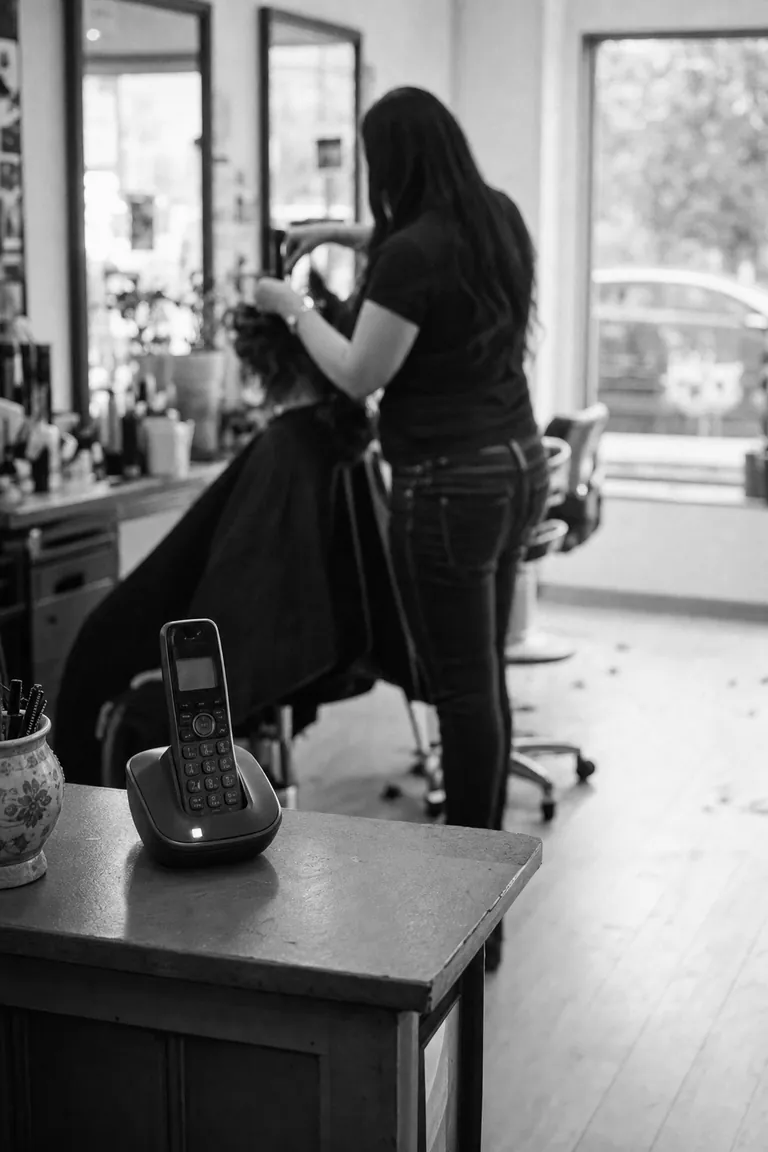
A familiar day behind the chair
Mid-service
The phone rings
Both hands are busy, and the client in the chair comes first.
Between clients
The message waits
The next appointment starts before there is time to call anyone back.
After closing
The work follows you home
Voicemails and schedule changes turn into a second shift at night.
Most people who got the voicemail never left one. They called the next salon on the list, and that one answered.
The problem was never that nobody answered. It was that answering, by itself, does not book anybody.
11:00 p.m. to 6:00 a.m.
In university I worked nights and weekends at LifeLabs customer centres, on the shift nobody else wanted. The calls came at every strange hour, and whoever was on the line still needed someone patient.
A few hours in, you stop reciting anything. You listen, you work out what has to happen next, and you get the person there without making them explain themselves twice. By sunrise you know the difference between answering a phone and helping somebody.
Two rooms, the same lesson. An owner’s time is the scarce thing, and whoever picks up should be able to help.

What we kept
Small businesses should not have to reorganize themselves around their software. Cleaning Answering gets built the other way around, and three rules decide what goes in.
01
Finish the job on the call
Answering is the easy part. The caller should hang up with the booking, the answer, the change, or a person who can help.
02
Protect the owner’s attention
If you are with a customer, you should not have to think about the phone at all.
03
Build with the businesses using it
Owners know things about their shop that we never will. When one of them tells us something is missing, we would rather change the product than explain why it works the way it does.
Still being written
A lot of what Cleaning Answering does started with an owner asking whether it could also do one more thing. If something is missing for your shop, tell us. We read every request, and we would rather build for the real work behind it than guess at it from here.

Put the next call somewhere useful.
Hear it answer, or set it up with your own hours, services, and calendar.